
Builders and developers
Site Stabilization Hydroseeding in New York, NY
Fast cover for disturbed ground on subdivisions, commercial pads, utility runs and municipal work.
- No-charge site visit and a written quote before any work
- Quotes split prep, seed mix, mulch and erosion items line by line
- Grass blend picked for the light and soil on your lot
Covering Disturbed Ground on a Schedule
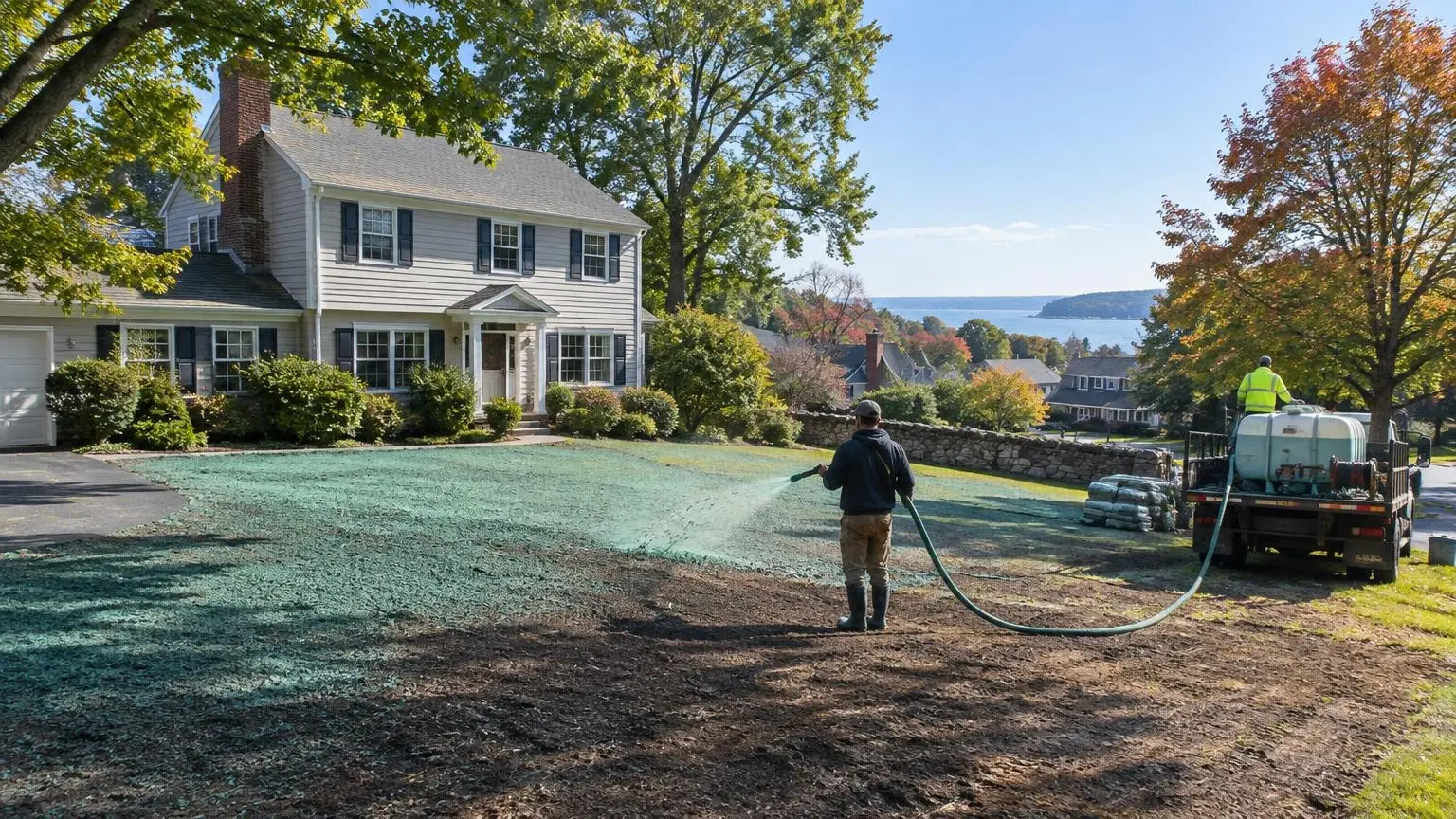
Site stabilization hydroseeding is the commercial side of our work in the New York metro: general contractors, home builders, developers, utilities and property managers who have disturbed soil that needs vegetation for a permit, an inspection or a closeout. We seed and mulch building lots, detention basin banks, road shoulders, pipeline and utility trenches, and the open acres around new commercial buildings across Long Island, Westchester, Rockland and Staten Island.
Why the clock matters
Federal construction stormwater rules cover any project that disturbs an acre or more, or a smaller lot belonging to a bigger development plan, and every permit has to include the minimum requirement to stabilize disturbed ground right away once activity has halted and is not expected to restart for over 14 days. Inside the five boroughs, the Department of Environmental Protection also requires a city stormwater permit when a project can drain to a city sewer and disturbs 20,000 square feet or more of soil, or adds 5,000 square feet of new impervious area. Those permits run through a stormwater pollution prevention plan that spells out where seed, mulch and sediment controls go. We follow the plan your engineer wrote and can work to your inspection dates.
Temporary and permanent seeding
Not every stabilization job is a final lawn. Areas that will be disturbed again later in the build often get a quick temporary cover so the ground does not sit bare through a storm season. Final grades get the permanent mix the plans call for, whether that is a lawn-type blend near buildings or a tougher low-maintenance mix on banks and basins. Hydromulch with tackifier can go down on its own, without seed, to hold ground for a short gap between phases.
How we fit into a job
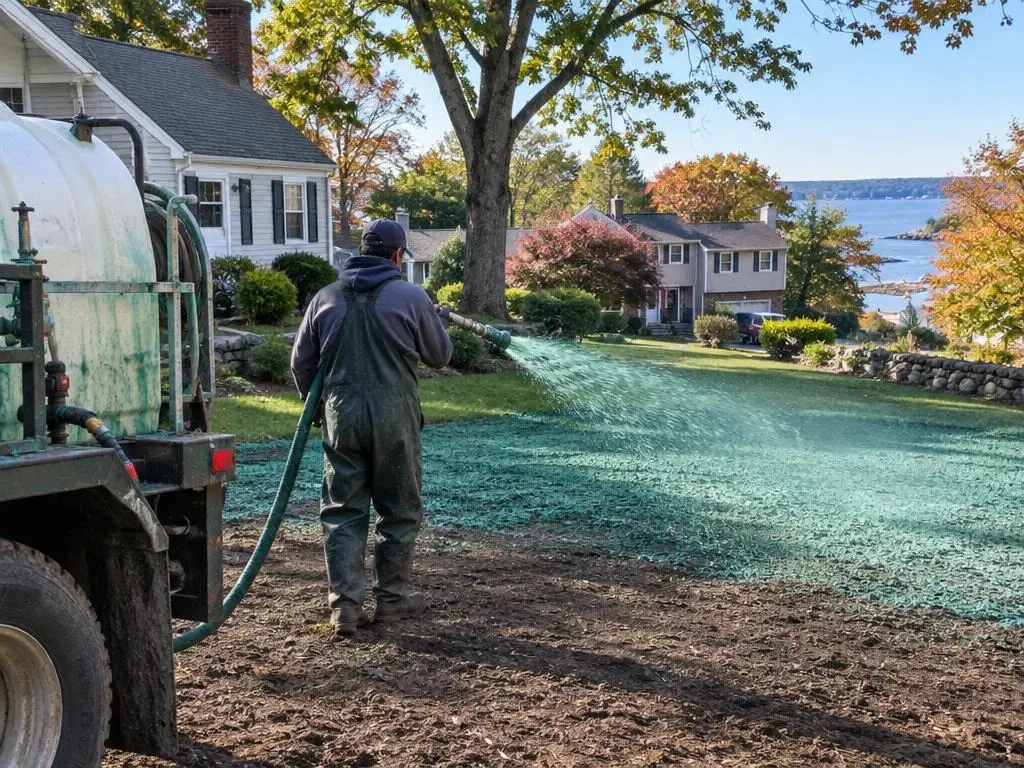
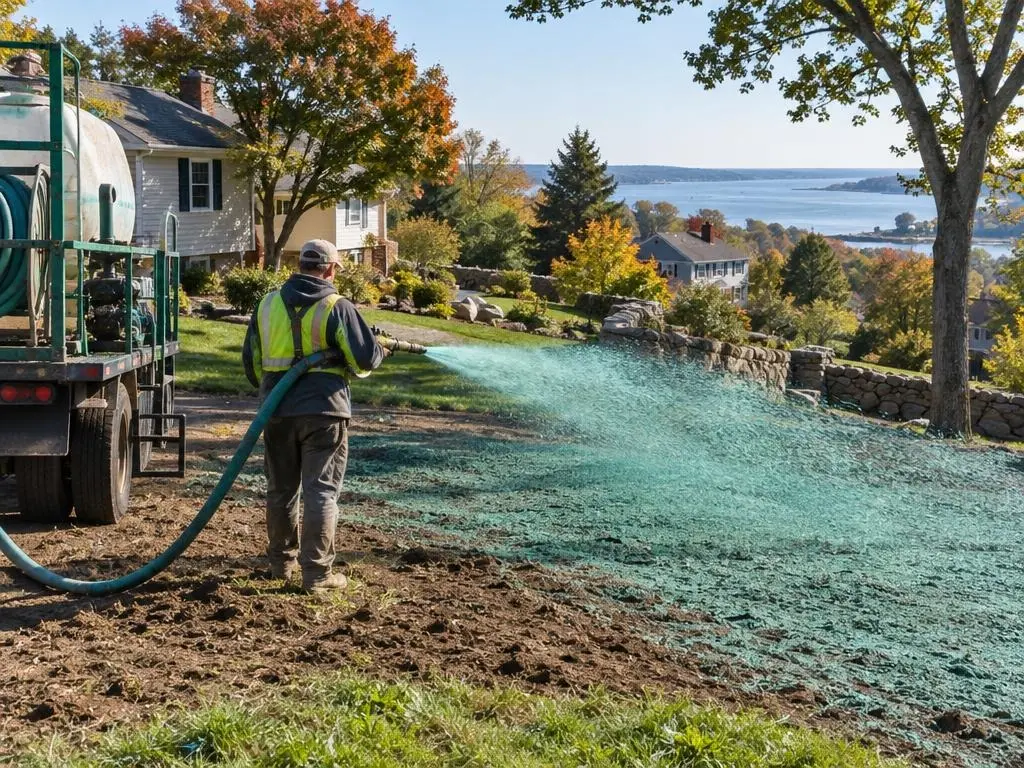
Hydroseeding contractors are usually one of the last trades on site, which means we arrive when everyone is in a hurry. We can mobilize with water on board, spray from roads or pads so equipment stays off finished grades, and come back for phased areas as they open up. Penn State Extension notes that hydroseeding is most efficient on large areas and steep slopes, and that is exactly where commercial work lives. We can also install the blankets and silt fence that often accompany seeding, which saves you a separate sub.
Choosing among hydroseeding companies
Ask who will install sediment controls, whether the mix matches the specification, how mulch rate is measured, and what happens if an area fails to take. Our quotes state the seed mix, mulch type and rate per acre or per thousand square feet, and the areas included, so you can compare them against the plans. We do not claim to cover everything; for large public bid work we tell you up front what we can and cannot staff.
Cost on bigger ground
The consumer pricing guides we found span about $2,000 up to $4,900 an acre for large-area hydroseeding, and a 2023 municipal park recovery bid from North Little Rock, Arkansas, priced the work at $2,595 and $3,325 an acre. Site access, water supply, mulch rate and how many mobilizations the schedule requires matter as much as acreage. We quote from your plans or a site walk.
Ground conditions on local sites
Commercial sites on Long Island's outwash plain tend to be sandy and well drained once the surface is broken, which means seed dries out quickly and mulch rate matters. Cuts through the moraines leave loose, mixed glacial material that slumps when it is wet. In Westchester and parts of Rockland, rock comes up close to the surface and topsoil is thin, so slopes need more than a lawn rate of mulch to hold. We look at the soil the excavator actually exposed, not just the plan notes, before we recommend a mulch rate or a blanket on any slope.
Who we work with
Our commercial customers range from a builder putting up four houses on a former estate lot in Westchester to site contractors on retail pads along Long Island's highways, landscape architects who need a meadow or low-mow mix installed to spec, and property managers stabilizing a failed bank behind a parking lot. We are glad to work as a sub to your site contractor or directly for the owner. Either way, we need the plans or a clear description of the areas, the mix, and the dates that matter to you, such as an inspection, a certificate of occupancy or a bond release. Give us those and we will tell you plainly whether the dates work.
Water, access and scheduling
Penn State Extension describes lawn hydroseeders with 500 to 1,500 gallon tanks, so on a big site water supply sets the pace. We plan fill points, truck routes and spray positions at the site walk so the rig does not have to cross finished grades or sit in the way of paving crews. Seeding late in the season is common on commercial work because buildings finish when they finish. When a closeout lands in November, we discuss whether a mulch-only cover or a temporary seed should hold the ground until the permanent mix can go down in spring.
Commercial Work We Take On
Typical stabilization and seeding scopes for builders and owners.
Subdivision and lot seeding
Final seeding of house lots, common areas and road edges as phases finish.
Detention basins and banks
Seeding and mulch on basin side slopes, berms and outlet areas.
Temporary cover
Fast seed or mulch on stockpiles and areas waiting for the next phase.
Utility and pipeline restoration
Seeding along trenches, easements and road shoulders after backfill.
Commercial grounds
Lawn and low-maintenance areas around new offices, schools and retail.
Mulch-only stabilization
Hydromulch with tackifier to hold bare soil between construction phases.
Published Large-Area Seeding Costs
| Scope | Range and source |
|---|---|
| Per acre, consumer guide (LawnStarter) | $2,136 to $4,897 |
| Per acre, consumer guide (Fixr) | $2,000 to $4,000 |
| One acre, consumer guide (HomeAdvisor) | $2,600 to $8,700 |
| Municipal park bid, 2023 (North Little Rock, AR) | $2,595 and $3,325 per acre |
| Wood-fiber hydromulch, from a state transportation department's 2025 erosion price list | $98 per 1,000 sq ft |
Published figures from outside New York, shown for scale. Site access, water, mulch rate and number of mobilizations change the price; your signed quote is the figure we bill.
How a Site Job Runs
1. Plans and scope
We read the SWPPP and seeding notes, and confirm areas, mix and dates.
2. Site walk
Access, water source, grades ready for seed and areas still active.
3. Seed and mulch
Spray from roads and pads, phase by phase as areas open.
4. Controls
Blankets, silt fence or inlet protection installed where the plan calls for them.
5. Follow-up
Return visits for touch-ups or new phases before inspection or closeout.
Why Choose Us for Site Stabilization Hydroseeding
Seed and controls together
One crew can handle hydroseed, blankets and silt fence.
Specs in writing
Mix, mulch rate and areas are listed so you can check them against the plans.
Phased visits
We come back as areas finish instead of waiting for the whole site.
Site Stabilization Hydroseeding Questions
Can you seed to the mix on our approved plans?
Yes. Send the seeding notes or specification and we will quote that mix and rate. If a listed seed is hard to get, we tell you before the job and propose a substitute for the engineer to approve.
What does stabilization mean for a construction stormwater permit?
Under the federal rule, disturbed areas must be stabilized immediately once work stops for more than 14 days. Seed with mulch, mulch alone, or blankets are common ways to do it; your SWPPP lists which ones the plan relies on.
Do you bring your own water?
Our tanks carry water, and we refill from a hydrant permit or on-site source when the job calls for multiple loads. Tell us what is available on site so we can plan trips.
Will you come back for later phases?
Yes. Most builder jobs are phased, and we schedule return trips as areas reach final grade.
Site Stabilization Hydroseeding Service Areas
- Hydroseeding in New York, NY
- Hydroseeding in Staten Island, NY
- Hydroseeding in Hempstead, NY
- Hydroseeding in Levittown, NY
- Hydroseeding in Garden City, NY
- Hydroseeding in Oyster Bay, NY
- Hydroseeding in North Hempstead, NY
- Hydroseeding in Port Washington, NY
- Hydroseeding in Huntington, NY
- Hydroseeding in Smithtown, NY
- Hydroseeding in Islip, NY
- Hydroseeding in Babylon, NY
- Hydroseeding in Yonkers, NY
- Hydroseeding in White Plains, NY
- Hydroseeding in New Rochelle, NY
- Hydroseeding in Scarsdale, NY
- Hydroseeding in Greenburgh, NY
- Hydroseeding in Mount Pleasant, NY
- Hydroseeding in Harrison, NY
- Hydroseeding in Yorktown, NY
- Hydroseeding in Clarkstown, NY
- Hydroseeding in Ramapo, NY
- Hydroseeding in Orangetown, NY
Get a Site Stabilization Hydroseeding Estimate
Email the plans or call with acreage and dates.